DIRECT-TO-FILM (DTF) TRANSFERS
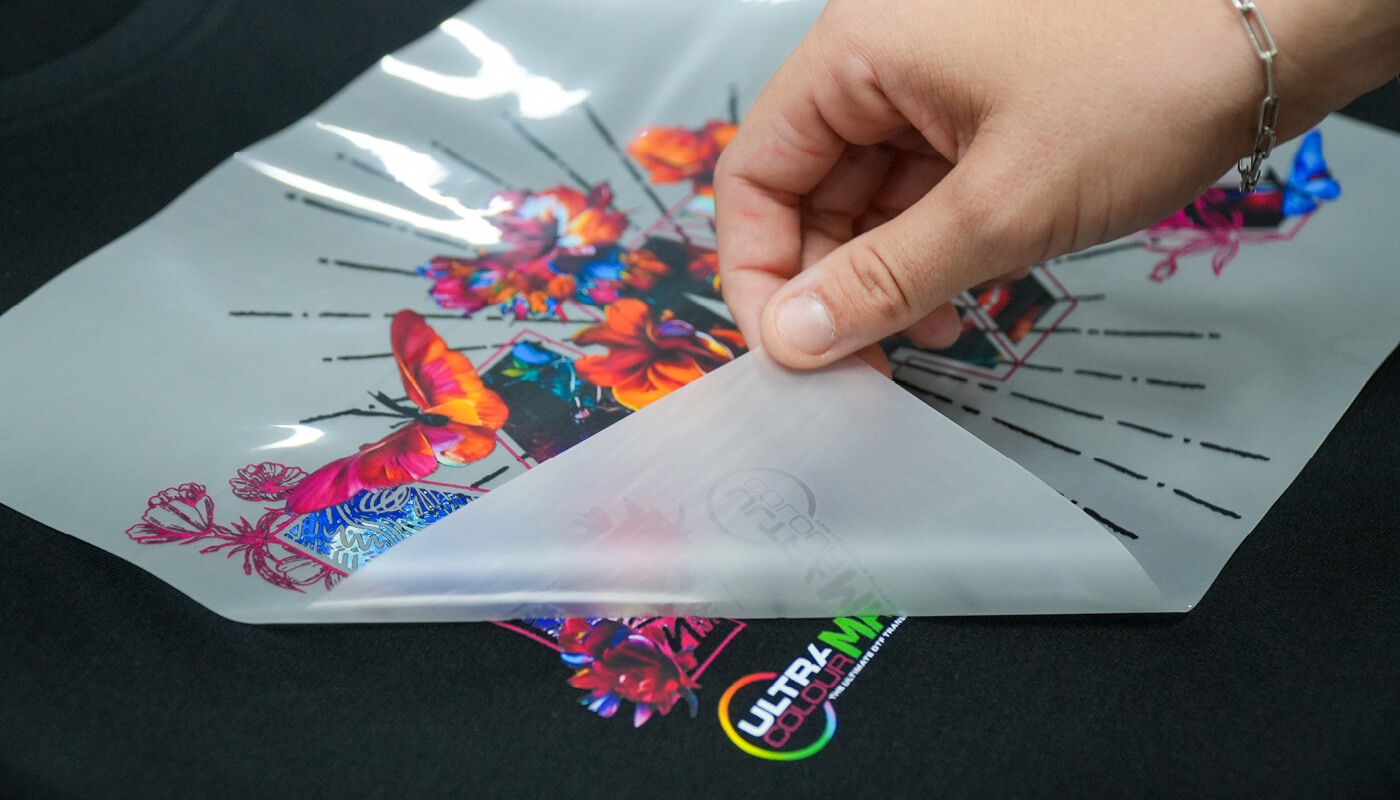
This section is for printing your own transfers. For finished custom transfers, see UltraColour MAX — no printing required.
Produce transfers
with confidence.
Cheap consumables are everywhere. Production knowledge isn't. Since 2006 we've been making transfers ourselves — the same film, powder and inks we sell are what runs through our own printers every day. When something goes wrong with your setup, we've already fixed it.

We don't sell you parts.
We help you nail the whole process.
There are plenty of suppliers happy to sell you a bag of powder and wish you luck. That's not what we do. We've dialled in the full process — printer calibration, dryer temperature, ink density, film selection — because we run this same setup to produce our own UltraColour transfers. When your prints are coming out grainy, or your transfers are feeling stiff and plastic, or your film is jamming mid-run, we know exactly what's happening and how to fix it.
We chose a European-made adhesive powder from Bostik over cheaper Chinese alternatives because we've run both. Batch consistency matters enormously at volume, and the Bostik powder delivers it. We chose double-sided matte film because single-sided creates static that causes jams in continuous-feed setups — we learned that the hard way so you don't have to.
If you want cheap, buy cheap. If you want to produce transfers you're proud of, we should talk.
What sets our consumables apart
Every consumable we stock runs through our own print room. We only sell what we'd stake our own transfers on.
We paid more for it because batch-to-batch consistency matters. Cheap powder means inconsistent bonding and failed transfers.
Our double-sided matte film eliminates static jams, produces soft vivid transfers, and peels hot, warm, or cold.
Output issues? We've seen them all. We debug your setup, not just resell you another bag of powder.
Everything you need to print great transfers.
Matched consumables that work together — no compatibility guesswork between different supplier combinations.

Hot-Melt Adhesive Powder
European-made by Bostik. Consistent bonding, fine particle size, and the same formula that bonds every UltraColour MAX transfer we produce. Available in 1 kg bags.

Double-Sided Matte PET Film
The same film we use for UltraColour MAX production. Double-sided matte eliminates static and jamming in continuous-feed setups. Hot, warm, or cold release. Vibrant, soft finish.

DTF Pigment Inks
CMYK + White pigment ink formulated for vibrant colour accuracy and a dense, opaque white base layer. Matched to our film for consistent ink receptivity and clean edge definition.
Mimaki TxF300.
We waited until this existed.
We didn't rush into DTF printing when the format took off. We watched the early printers fail businesses with unreliable white ink systems and inconsistent output. The Mimaki TxF series changed that — Japanese engineering, local technician support, and class-leading print quality with OEKO-TEX® ECO PASSPORT certified inks. It was worth the wait. Now we sell them, support them, and print on them.


We don't just sell you consumables and leave.
Getting great DTF output isn't just about ingredients — it's calibration, process discipline, and knowing what to adjust when things drift. This is how we support your setup.


Right Consumables
We help you choose the right film weight, powder grade, and ink formulation for your specific printer and production volume — not the cheapest option that sort of works.
Printer Calibration
White ink density, colour profiles, print head alignment — we help you dial in your printer for consistent output, not just "close enough."
Dryer & Cure Setup
Under-cured powder causes adhesion failures. Over-cured powder affects flexibility and feel. Getting dryer temperature and belt speed right is the step most people get wrong.
Ongoing Troubleshooting
Output issues evolve over time as heads wear, seasons change, and batches vary. We've seen it all — call us when something shifts and we'll help you diagnose it fast.
Talk to us before you buy. A five-minute conversation can save you weeks of trial and error.
Frequently asked questions.
Questions we hear from decorators getting into DTF printing — or upgrading their existing setup.
What DTF consumables do I need to get started?
To produce DTF transfers in-house you need four things: a DTF printer (such as the Mimaki TxF300), DTF PET film, CMYK + White pigment inks, hot-melt adhesive powder, and a curing oven or heat tunnel to melt the powder. A heat press is then required to apply the finished transfer to the garment.
Velflex stocks all of the consumable components — film, powder, and inks — as well as DTF printers and heat presses. If you're building a setup from scratch, we can help you spec the right combination for your volume and budget.
Why is European-made adhesive powder better than Chinese alternatives?
The core issue is batch-to-batch consistency. European-manufactured adhesive powder — ours is made by Bostik, a global adhesive specialist — is produced to tighter quality tolerances than most low-cost alternatives. What this means in practice is that each bag performs predictably and consistently, which matters enormously when you're running volume.
Cheaper powders often show variation between batches: different particle sizes, inconsistent melt temperatures, or irregular bonding. These variations translate directly into failed transfers, re-runs, and frustrated customers. We paid more for the Bostik powder because we run it ourselves and the consistency is measurably better.
What is double-sided matte DTF film and why does it matter?
Most entry-level DTF film is single-sided — meaning only one face has the coated surface for ink adhesion. The problem with single-sided film in continuous-feed production is static. As the roll feeds through your printer, the uncoated face generates static charge which causes the film to cling, misfeed, and jam. This is a major productivity killer when you're running long jobs.
Double-sided matte film has a matte coating on both faces, which dramatically reduces static buildup and produces much more reliable feeding in roll-to-roll and continuous production setups. Beyond the static benefit, the matte surface also produces a softer, more premium feel on finished transfers compared to single-sided alternatives, and allows for hot, warm, or cold release depending on your preference.
Why do my DTF transfers feel thick or plasticky?
A stiff, plastic-feeling transfer is usually caused by one or more of the following: too much adhesive powder applied, an under-calibrated white ink layer that's too thick, or a film that doesn't have adequate ink receptivity (causing ink to sit on the surface rather than absorbing into the coating).
The fix involves dialling back powder application, adjusting white ink density in your RIP software, and ensuring your film choice is appropriate for the ink formulation you're using. If you're experiencing this issue, call us — we can usually diagnose the root cause quickly based on what you describe.
What's the difference between hot peel, warm peel, and cold peel?
Hot peel means removing the film immediately after pressing while the transfer is still hot. This is faster and suits high-throughput production workflows. It typically produces a slightly glossier finish.
Cold peel means waiting for the transfer to cool completely before removing the film. This takes longer but produces a smoother, more matte surface finish and can give better adhesion on some fabrics. Warm peel sits between the two — allowing the transfer to cool partially before peeling.
Our double-sided matte film supports all three methods. Hot peel is the most common choice for production environments because it keeps throughput high. The right method for you depends on the garment fabric, the finish you want, and your production pace.
Why is my DTF printer's white ink clogging?
White ink settling and clogging is the most common technical issue in DTF printing. White pigment particles are significantly heavier than CMYK pigments and settle quickly when the printer sits idle. This is exactly why the Mimaki TxF300 uses a white ink recirculation system — it keeps the ink in constant circulation to prevent settling, which eliminates a major source of head clogs and ink waste.
If you're running a printer without a recirculation system, you need to run regular head cleaning cycles and daily agitation to prevent settling. Using the correct ink formulation for your printer model is also critical — using the wrong ink viscosity significantly increases clog risk. Contact us if you're troubleshooting ongoing white ink issues.
How do I get accurate colour from my DTF printer?
DTF colour accuracy depends on a properly calibrated ICC colour profile specific to your printer, ink, and film combination — plus correct RIP software settings. Using a generic profile with non-matched consumables is one of the fastest ways to get inconsistent colour.
Because we use matched consumables (our film and inks are selected to work together), the colour profile calibration is more straightforward and repeatable. If you're seeing significant colour drift between prints or batches, it's usually a sign that your ink and film aren't matched, or your RIP profile needs updating. We can assist with this as part of our setup support.
How long do DTF transfers last on garments?
With quality consumables and correct press settings, DTF transfers can withstand 50+ wash cycles on most cotton and cotton-blend garments. Durability is affected by press temperature, pressure, and time accuracy — under-pressing is a common cause of early wash failures — as well as the quality of the adhesive powder used.
Technical polyester garments require extra care. Standard DTF is prone to dye migration on heavily dyed synthetics and sublimated fabrics — where the garment's dyes bleed into the white ink base over time, discolouring the transfer. If you're regularly printing on technical polyester or sportswear, we'd recommend talking to us about our UltraColour PRO transfers with purpose-built dye blocker options instead.
What dryer temperature should I use for DTF powder curing?
Curing temperature and belt speed vary by powder type, oven design, and ambient conditions. Our UltraColour 4529 adhesive powder is typically cured at between 120°C and 150°C — but the right setting for your specific oven requires calibration, not guesswork.
Under-cured powder looks fine but produces weak adhesion that fails on washing. Over-cured powder can become brittle, affecting the flexibility and longevity of the finished transfer. We recommend using an IR thermometer to verify your oven surface temperature against its display reading, as many ovens run significantly hotter or cooler than indicated. Contact us to help dial in your specific setup.
Can I use Velflex DTF consumables with any printer?
Our DTF PET film and adhesive powder are compatible with standard DTF production setups regardless of printer brand. DTF inks, however, are printer-specific — the viscosity, formulation, and head compatibility needs to match your particular print head type. Contact us to confirm ink compatibility with your specific printer model before ordering.
For new printer purchases, we stock and support the Mimaki TxF300 series. If you're running a different DTF printer and are experiencing compatibility issues, we're happy to advise.
I don't want to produce my own transfers. Can I just order finished custom transfers instead?
Absolutely — that's a completely different part of what we do. If you want finished, ready-to-press custom DTF transfers without owning a printer, UltraColour MAX is our custom transfer service. Upload your artwork, set your quantity, and receive transfers ready to press directly to your garments. No minimum orders, area-based pricing, and automatic ganging — no gang sheet setup required.
See UltraColour MAX for more information.


Not ready to print your own? We do that too.
UltraColour MAX gives you custom, ready-to-press DTF transfers without owning a printer. Upload your artwork, receive finished transfers. No minimums, no gang sheet setup, no printing required.